


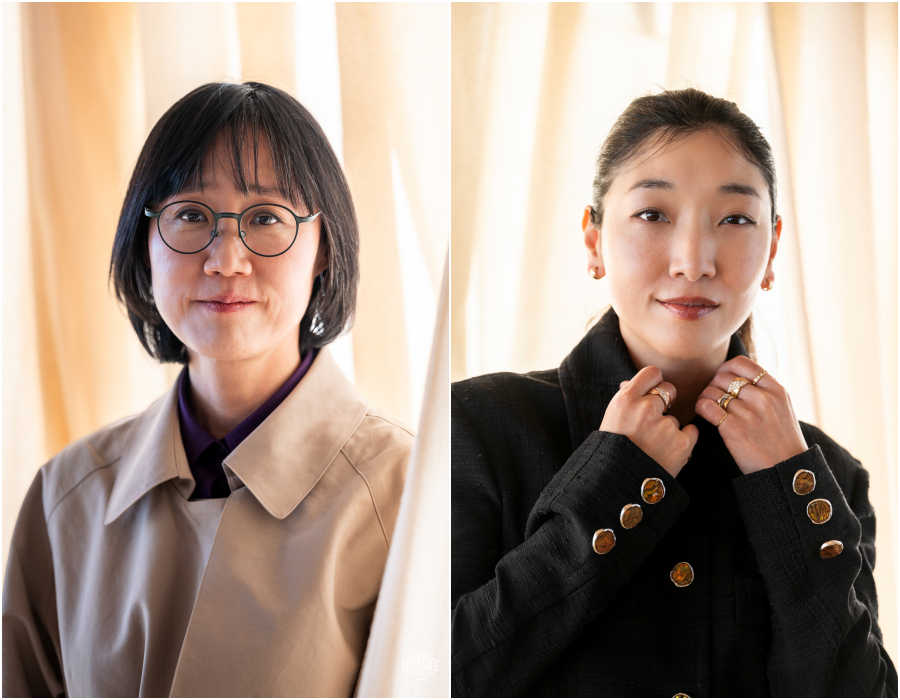
[Dispatchㅣ Cannes (France)=Reporter Jung Tae-yoon] "It had to be Ando Sakura."
Director Jung Juri is an accomplished filmmaker skilled at conveying social messages through focused character portrayal. All three feature films she has released so far have been invited to the Cannes Film Festival. 'Dohee,' 'Next Sohee,' and 'Dora.'
While she had previously focused on how a single person becomes isolated and faces inevitable death, this time she wanted to maximize the inexplicable emptiness that a character possesses.
The first casting was not Dora, but Nami. Nami is a Japanese woman living in a village on Korea's South Coast. She is also a figure on whom Dora's gaze repeatedly settles.
Director Jung said, "An actress who reveals an entirely different face with each work but always comes down to Ando Sakura, doesn't she? Even amid diversity, Nami's distinctive appearance felt that way."
'Dispatch' met Director Jung Juri and Ando Sakura near the Palais des Festivals in Cannes, France.
◆ Freud's Dora
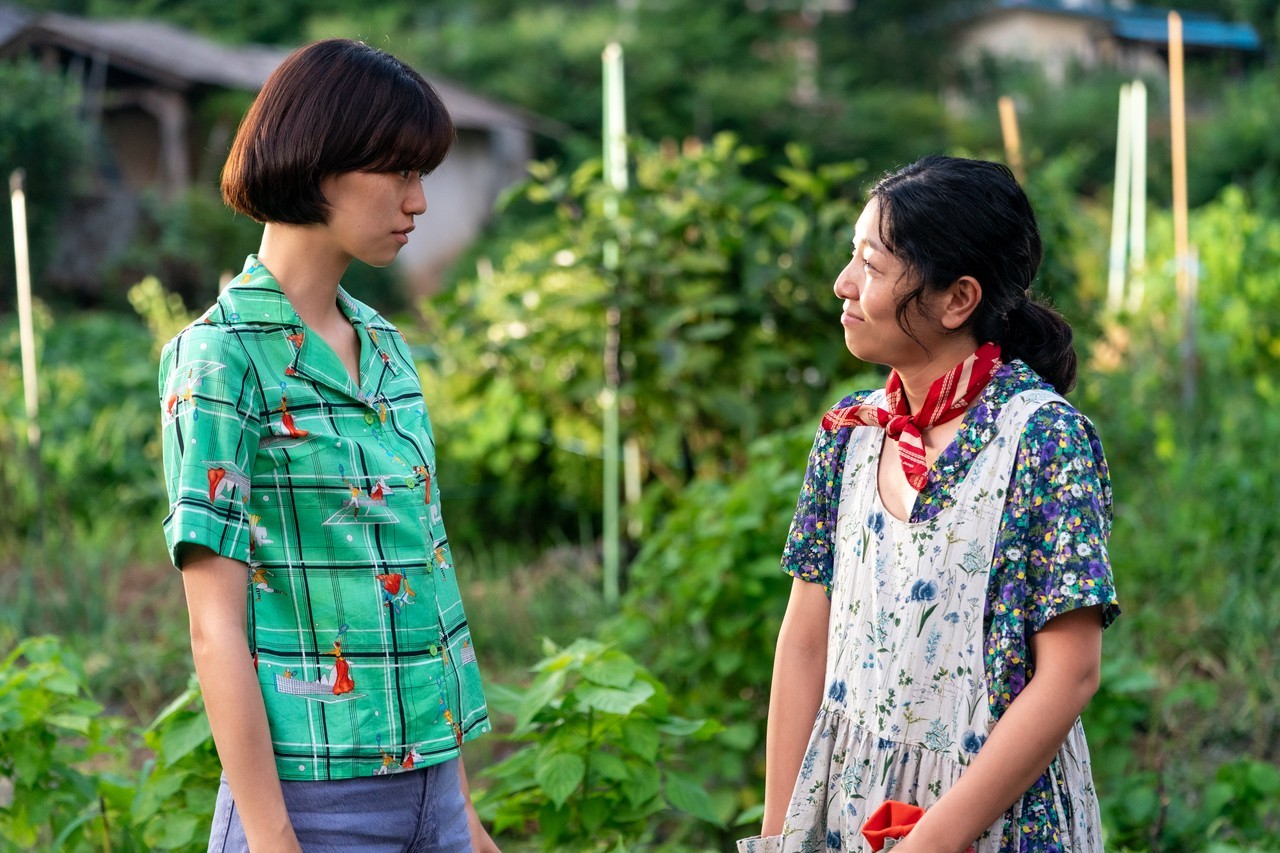
'Dora' depicts a story centered on a girl named Dora (played by Kim Do-yeon) who suffers from a terrible affliction of body and mind, leaving Seoul to stay at a summer seaside villa, where everything gradually begins to crumble as she experiences love for the first time.
Director Jung took inspiration from 'Analysis of a Case of Hysteria,' one of Freud's case study works. Freud focuses on analyzing the complex psychological elements a sensitive girl experiences with those around her.
However, this treatment ends in failure, and Dora is recorded as a hysterical patient prone to concealment and deception.
Director Jung reversed this case. She transformed it into a human capable of self-healing and recovery. She hoped it would become a case where a being losing light amid suffering finds complete recovery and takes a leap forward.
Director Jung said, "When I was younger, I found it fascinating from Freud's perspective. But at some point, everything seemed inverted to me. I wondered, 'Is Dora's voice here?'"
"I thought his position should also be heard, so I rewrote the story. Looking at it again, Dora was not the one desiring but the object of desire. So I wanted to tell a story about Dora becoming the subject of desire and how far she could go." (Jung Juri)
◆ Ando Sakura, Her First Korean Film
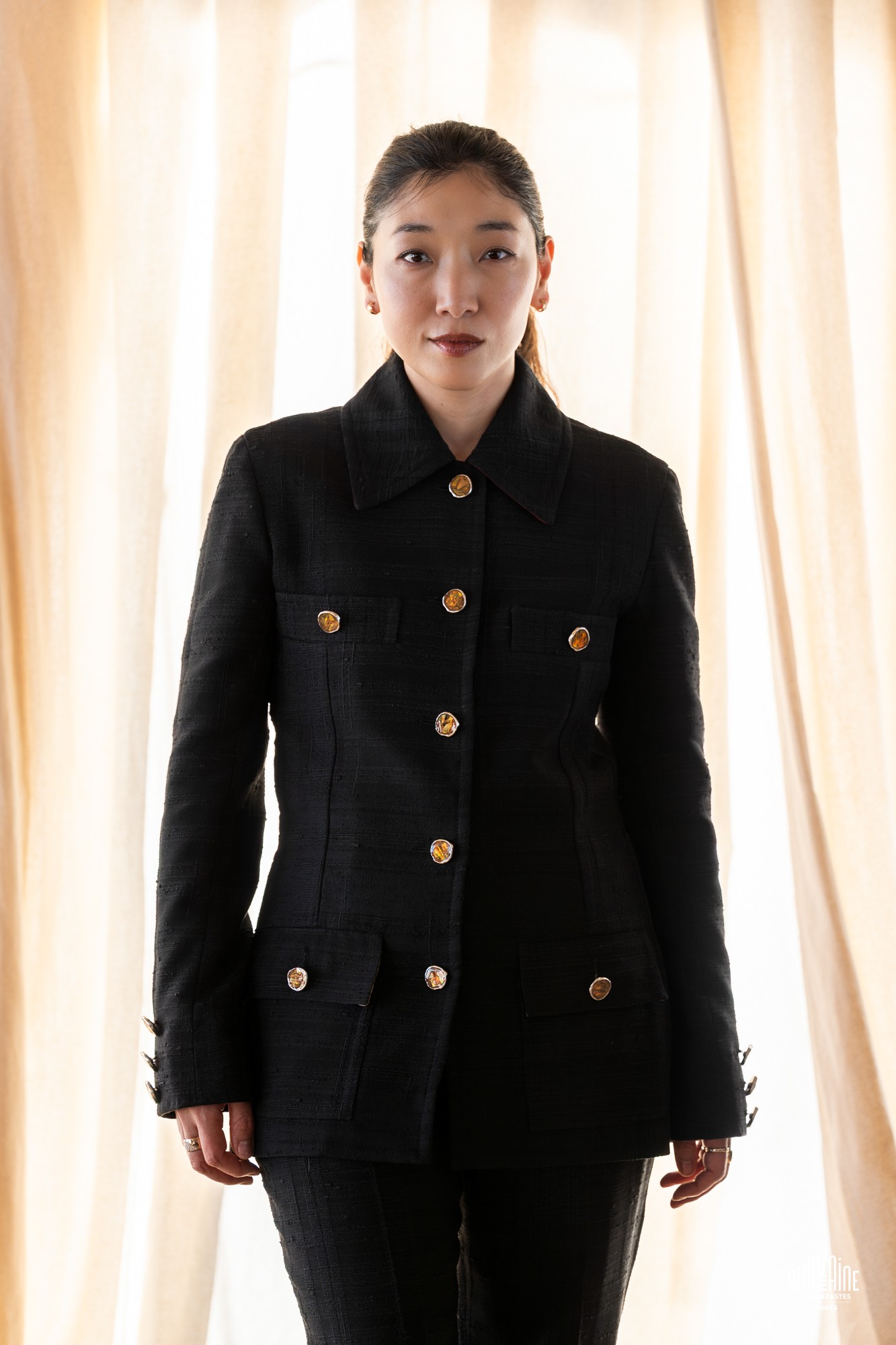
Ando Sakura is an acclaimed actress with the most overwhelming award history among her generation of Japanese actors. Through 'Dora,' she takes on the lead role in a Korean film for the first time.
She played the role of Nami. After undergoing breast cancer surgery five years prior, Nami settled her affairs and came to a village on Korea's South Coast, her mother's hometown. Due to Dora, she finds herself caught in an unexpected whirlwind of emotion.
At first, she declined to appear. She said, "I believe language greatly influences how one accepts a film. I thought using a language I cannot speak would hinder immersion."
However, a letter from Director Jung moved her heart. "She told me I didn't need to speak Korean. Japanese or English was fine too. She said she would adjust the dialogue to suit me, so I made the decision," she conveyed.
In fact, Director Jung revised all the dialogue to fit Ando. She admitted, "Digesting dialogue while not speaking Korean at all was a much more difficult problem than I had anticipated."
"I decided to find the language of a person who has been living in Korea for five years. Language that only Nami could use. For example, words like 'gwanggyegeopsi' (doesn't matter). Also, while working, I came to realize that a lot is conveyed when not speaking." (Jung Juri)
Ando agreed. "When I did it in Japanese, sometimes I felt my acting was bound by the words. Even if I say 'thank you,' sometimes it feels like gratitude, and sometimes it carries a negative emotion, doesn't it? I don't think words are everything," she added.
◆ "If You Let Go Instead of Holding On, It Surfaces"
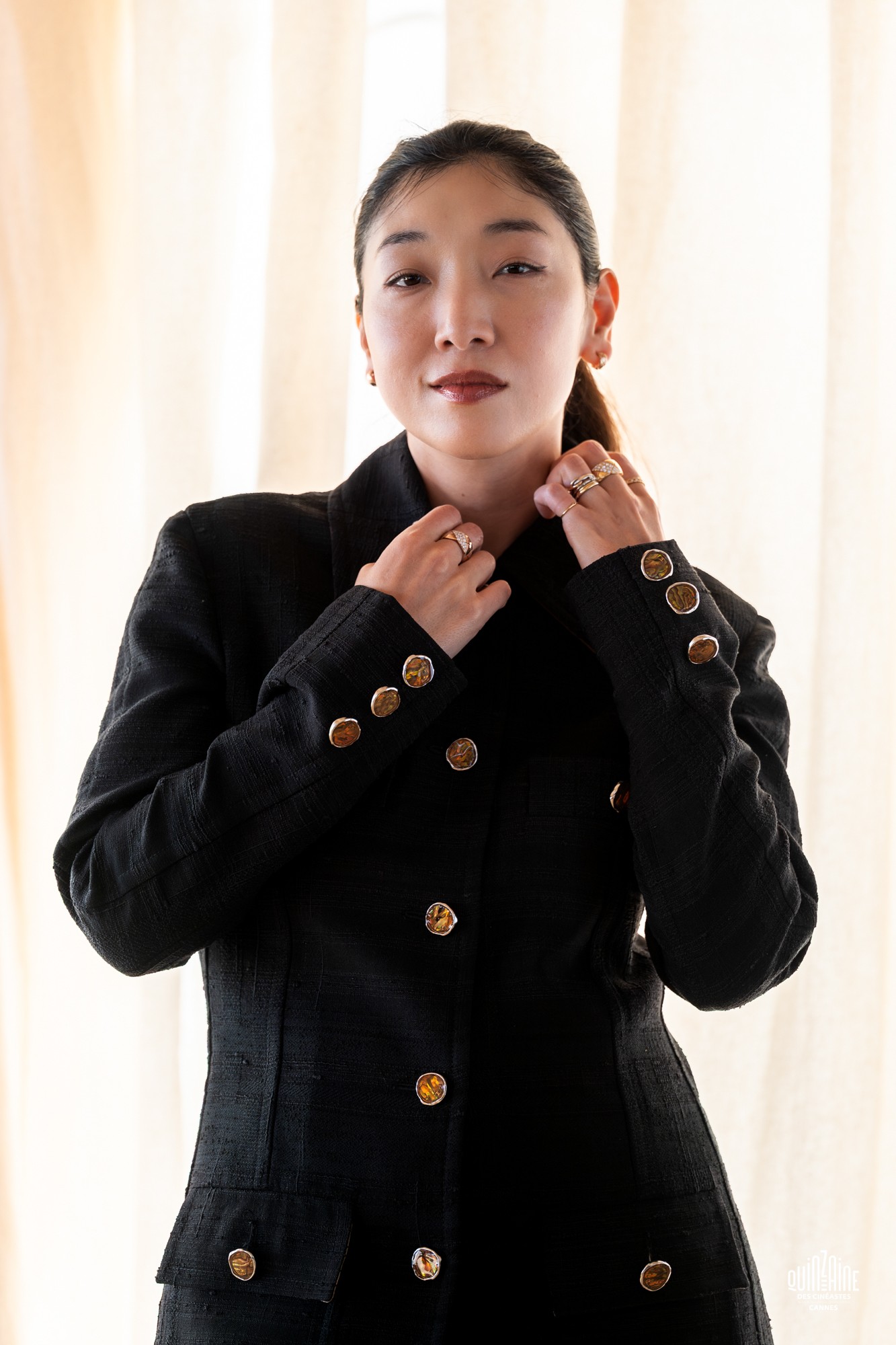
Ando Sakura alternates between Japanese and Korean in her performance. Though her Korean is rudimentary, each word she utters carries weight. The line that left the greatest impact in the film also came from her lips.
She said, "I remember exactly: 'If you let go instead of holding on, it surfaces.' I understood the meaning of every single word and delivered the line. I wanted that line to dye itself in naturally," she said.
"When Nami delivered that line, I expressed it like a living being floating on the sea, remaining in that state. I wanted to enter into the picture visible within the script." (Ando Sakura)
Director Jung also ran toward that singular moment. She said, "It was the most important line. I thought about how Nami could move toward that word" and emphasized, "I made efforts so that this line could best reveal Nami."
All the adults surrounding Dora possess duality. People who are neither simply good nor purely evil. Nami was no different. Ando Sakura did not forcibly create that alien quality. She entrusted it to nature.
"If you decide on an answer and act, you remain stuck in that. I focused on the moment of connection with each person. I thought that if I concentrate on acting in the important parts, Nami's alien quality would naturally follow along as well." (Ando Sakura)
◆ Dora, Kim Do-yeon
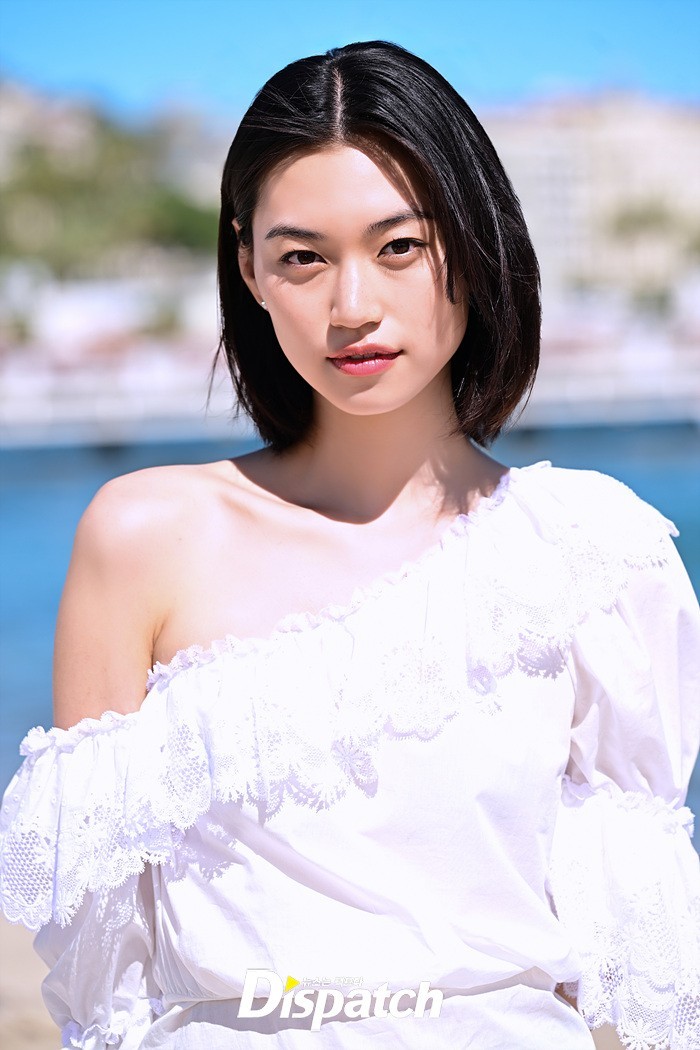
Kim Do-yeon, from I.O.I, took on her first lead film role. The Dora she plays is a sensitive child who has suffered from neurasthenia since childhood. In a seaside village, she forms relationships with various people and experiences emotional communication for the first time.
The film depicts her awakening to her own desires and beginning to want things from others, and the process of achieving them. Director Jung explained, "We first confirmed Ando Sakura's casting, and then held auditions for Dora."
"We had to consider the combination of the two actresses. After lengthy auditions, she was selected. Dora and Nami have visual contrast, and when I thought about the two of them conversing together, I felt the vocal combination was so good." (Jung Juri)
Ando Sakura recalled Do-yeon, saying, "I was really grateful that Dora was Doyeon. There was a part where we leaned on each other and endured" and "Even though we spoke different languages, there was something that transcended that. It felt like a more special team."
The two had to handle scenes with high intensity. Ando said, "I made a promise to Doyeon. Because this film will remain with us for life, if there's anything that troubles either of us, I will stand by Doyeon," her eyes welling up.
"I wanted to protect myself and protect Doyeon, and also protect the work. And as someone who has a child, I wanted to change things in a way that fits this era." (Ando Sakura)
Director Jung also revealed, "As a female director handling intimate scenes, if I don't do it properly, there won't be a next time. So I planned and prepared how to consult with the female cinematographer. It was really difficult," she shared.
◆ Audiences' Dora
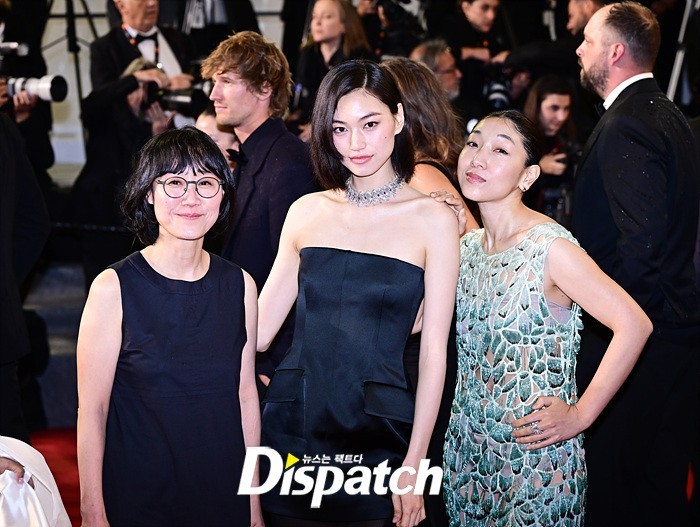
'Dora' was completed through cross-border collaboration, with cinematography by French cinematographer Irina Lubtchanski, visual effects from Korea and France, sound work from Korea and Luxembourg, and color correction from France.
It was also selected as an official invitation to the Directors' Fortnight section of the 79th Cannes Film Festival, chosen as an experimental and progressive work in a liberal atmosphere.
It made its world premiere to global audiences at the Theatre Croisette during this Cannes. What kind of work will 'Dora' become for her? Director Jung opened up, saying, "It's been ten days since the film was completed. I'm still not sure."
"Looking back, I always realize I'm telling stories of lonely people. Now I'm wondering if I should distance myself from loneliness for a while. I think I'll take a breather and think more broadly now." (Jung Juri)
Ando Sakura also expressed her ambition to participate in works from various countries through this film. She said, "I was moved by the very fact of making a film by bringing together the hands of people from different countries. It heightened my sense of ambition."
"I freshly felt again that film is a noble medium that can reach the hearts of people from different cultural backgrounds. I've come to have the ambition to participate in films not just from Korea but from other countries as well." (Ando Sakura)
<Photo source=Dispatch DB, Red Peter>