


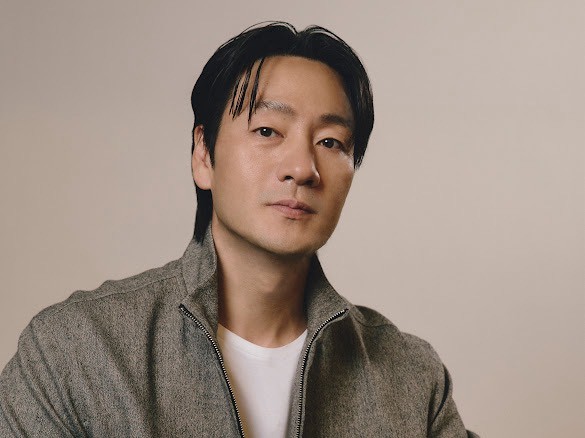
[Dispatch=Reporter Kim So-jung] "I think issues should be raised, not resolved." (Park Hae-soo)
The suffocating frustration that clogs the chest sometimes transforms into the most powerful vow: "I will never forget." ENA's "Scarecrow" is exactly that. Instead of refreshing fantasy, it chose weighty social indictment and somber mourning.
At the center of this work stands Park Hae-soo in the role of detective Kang Tae-joo. Kang Tae-joo is not a perfect detective. In a tragic incident, he loses everything. Yet to the end, he strives to uphold "human duty" and "truth."
"Dispatch" met Park Hae-soo one day before the series finale. In sitting across from him, the deep loneliness of Kang Tae-joo seeped through. The emotion of loss still lingered.
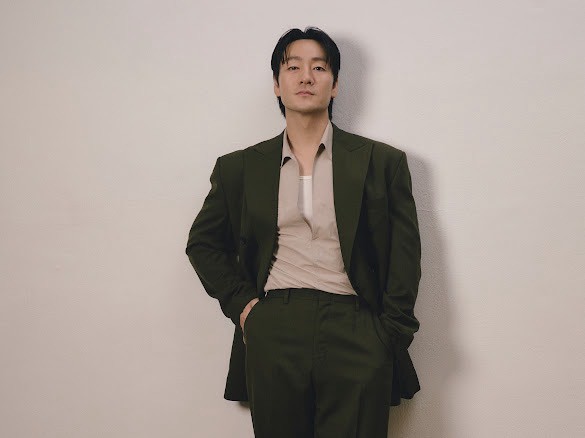
◆ The Fear of a True Story
In fact, acting in a case involving actual victims and bereaved families was never easy, even for a seasoned actor. Park Hae-soo recalled, "Honestly, I was scared first. The situations Tae-joo had to endure were too harsh."
"Scarecrow" does not focus on the satisfaction of finding the real criminal like conventional genre films. It centers on the 30-year narrative of those falsely accused through abuse of state power, bereaved families who lost their children, and those left behind.
Because of this, the drama consistently maintains a "difficult narrative." Park Hae-soo explained that this was precisely the director and writer's insight and the reason for the drama's existence.
"We wanted to tell the story of what pain those people of that era endured, not just the victims but also how the people around them had to endure those times."
Meticulous historical accuracy lent strength to the drama. Park Hae-soo said, "The director is from the PD production background of 'Wanted.' He had vast materials necessary for historical accuracy. When I actually saw it, it was terrifying and brutal."
"My mother cried a lot. Not because of my character, but because the victims and families at that time, the young people who suffered wrongful accusations—she found them pitiful. That was meaningful to me as well."
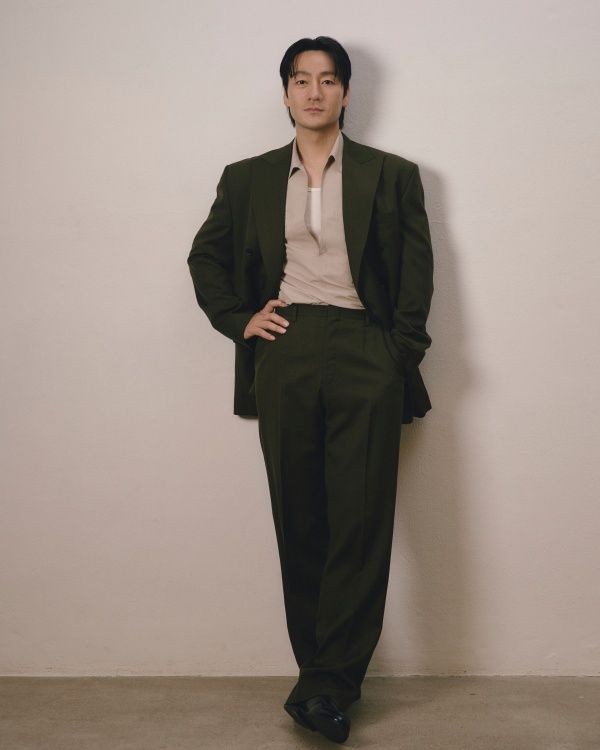
◆ The Imperfect Kang Tae-joo
Kang Tae-joo is by no means a superhero overflowing with a sense of justice. He harbors ambitions for advancement, comes to Seoul only to be demoted, and sometimes brings tragedy upon himself through misjudgment.
"Tae-joo seeks the truth, but in the process he constantly wavers. His judgment becomes clouded because of his brother, and he breaks under social pressure and stress. Actually, that made more sense to me. He's neither a complete detective nor a hero."
In the latter part of the drama, Park Hae-soo plays elderly Kang Tae-joo. Director Park Jun-woo scheduled the elderly scenes in the latter half of filming to maximize the passage of time and the emotion of loss.
Elderly Kang Tae-joo does not turn away from his mistakes. He tries to correct a button that was fastened wrong. "I wondered if we could really meet such an adult in reality. Kang Tae-joo is a much greater human being than me," he confessed.
The chemistry with the real criminal Lee Yong-woo (played by Jung Moon-sung) was fiercely intense. The elderly scenes of these two, who held the key to the work's essence, were shot intensively over 3-4 days.
Park Hae-soo said, "Moon-sung and I memorized all the dialogue and filmed it like a play. I liked the direction where the criminal wasn't built up or idolized. That feeling of 'this guy's nothing special'—it gave me goosebumps."
◆ Tae-joo, You've Been Through So Much
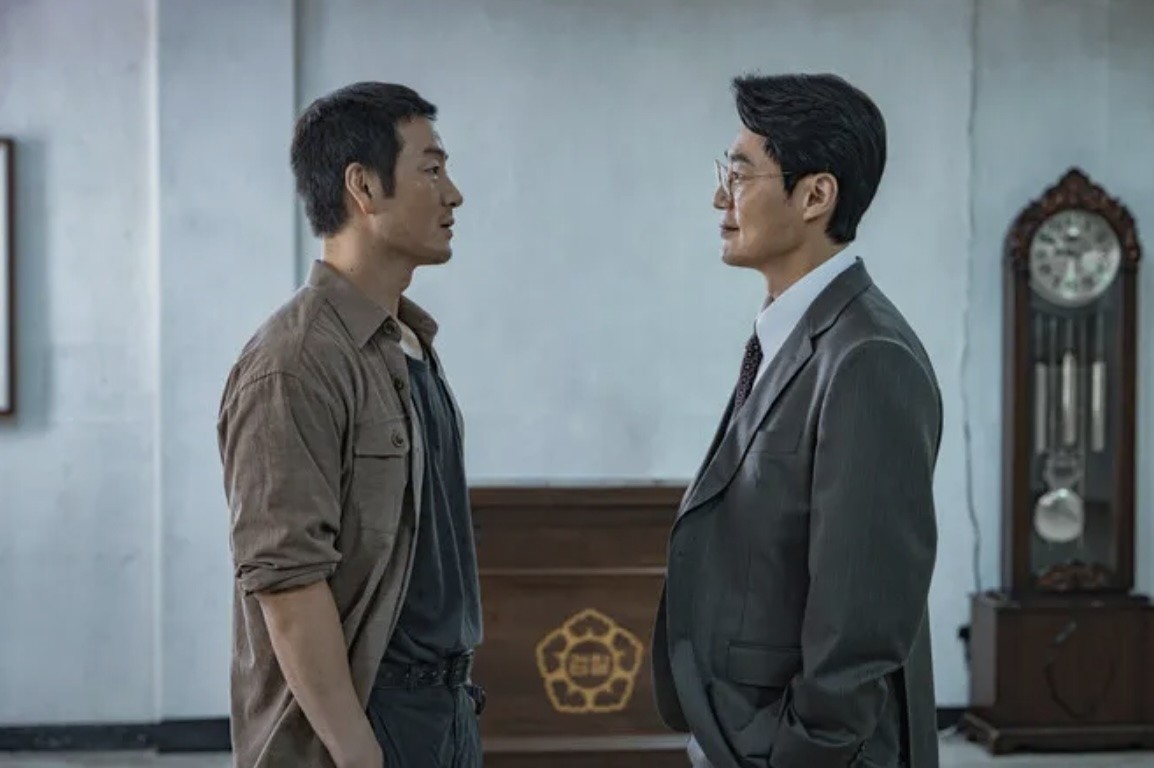
The driving force of "Scarecrow's" popularity was the chemistry between Lee Hee-jun (playing Cha Si-young) and Park Hae-soo—a "hostile chemistry." The two, who met as a school violence victim and perpetrator, reunite as a detective and prosecutor after becoming adults, and become cruelly entangled.
In reality, the two have built a friendship over 20 years since their theater days. Before filming, they even rented a separate practice room to switch roles and perform improvisation with thorough preparation.
"Hee-jun hyung is an actor I've always admired, liked, and wanted to emulate. Actually, it can feel awkward when actors practice that way with each other, but in front of him, I could take off my mask and play completely freely."
Kang Tae-joo and Cha Si-young share the common denominator of being "the son of a domestic violence victim." Although they stand as adversaries in the drama, Park Hae-soo also offered an interpretation of the subtle relationship underlying that.
Park Hae-soo said, "There would have been a common ground between them where they could lean on each other in subtle ways. It doesn't appear in the drama, but I think they would have embraced each other. Because of that, they relied on each other a lot, and even as they grew up, they probably harbored some hope."
What did the title "Scarecrow" symbolize? He pointed out, "It refers to the criminal, but it seems to represent the spirit of the era. Tae-joo also becomes like a scarecrow. It's a title that speaks to the entirety of how the powerful and powerless are consumed by authority."
Park Hae-soo hoped that "Scarecrow" would be remembered beyond being a simple crime thriller. "I hope it slowly fades from memory, but those who wish to remember it will remember it. I hope people continue to pay attention, be aware, and recognize so that such things never happen again. (To the victims) I dare not offer words of comfort," he said, bowing his head.
Finally, Park Hae-soo bid farewell to Kang Tae-joo, who lived so fiercely.
"Usually I recover well after a work ends, but after it airs, I found myself going back in. I want to send him off well. And I also want to ask if I expressed Tae-joo well. He's a character I really want to meet again later. Tae-joo, you've been through so much!"
<Photo provided by BH Entertainment>