


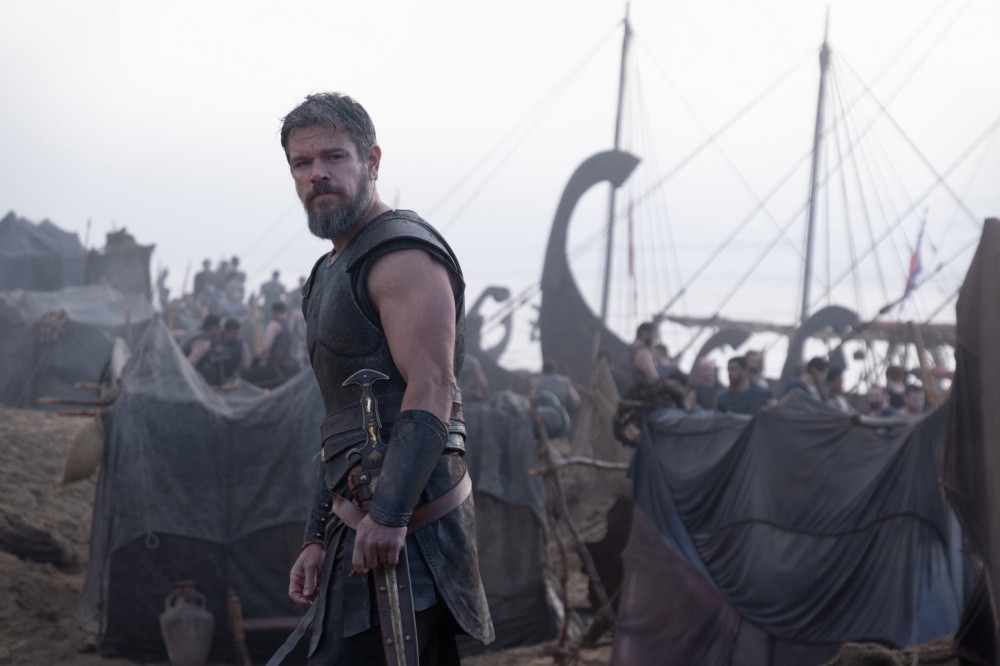
[Dispatch=Jung Tae-yoon] (※ This article contains spoilers.)
Touching on classics is a double-edged sword. Especially when dealing with mythology like the "Odyssey" that has been interpreted for thousands of years.
In fact, the film "Odyssey" (Director Christopher Nolan) was controversial even before its release. The casting of a Black Helen and the casting of a transgender actor. It created considerable distance before audiences even entered the theater.
But the film does not dwell on that point. It pushes forward rapidly from the start. Despite its long 172-minute runtime, the opening is edited as if compressed like a short video.
It does not exhaustively explain the Trojan War and its surrounding context. Presupposing that audiences already know the story, it throws only the essential images and immediately moves to the next stage.
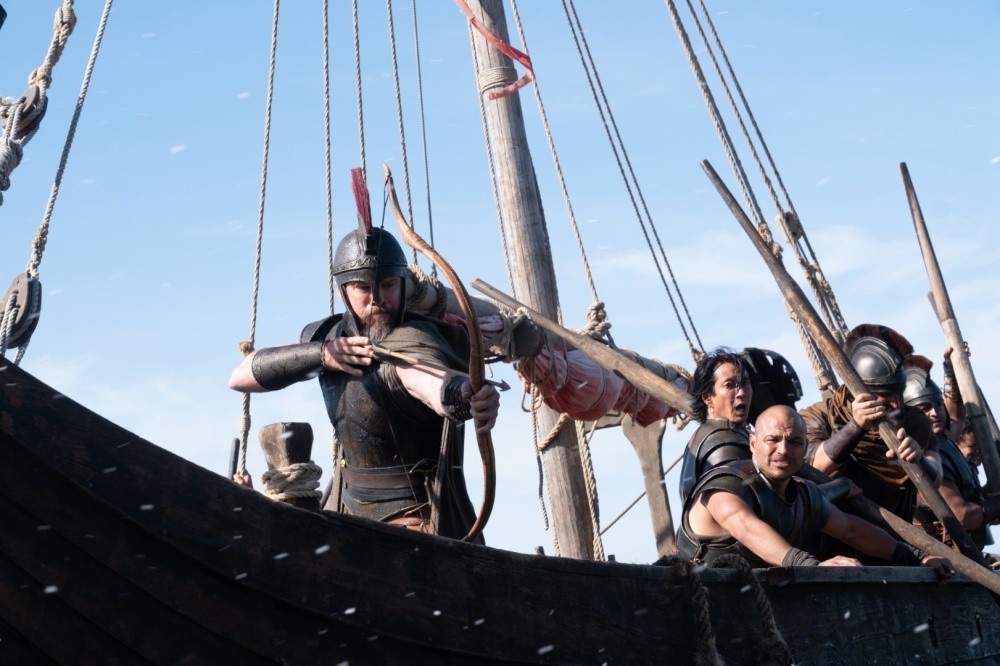
This bold omission is not merely a matter of pacing. It is a clear choice about where this film will focus. As a result, the film does not expend energy early on.
Afterward, much greater density is allocated to Odysseus's return journey. The audience's gaze naturally shifts from war to return, and to the inner humanity revealed in that process.
And what it captures at that point is the essence of mythology. The essence referred to here is not the spectacle of monsters and adventure. It is "what state humans are left in after war."
Odysseus does not remain simply as a hero returning home. He is a survivor who must return bearing the weight of those memories and guilt.
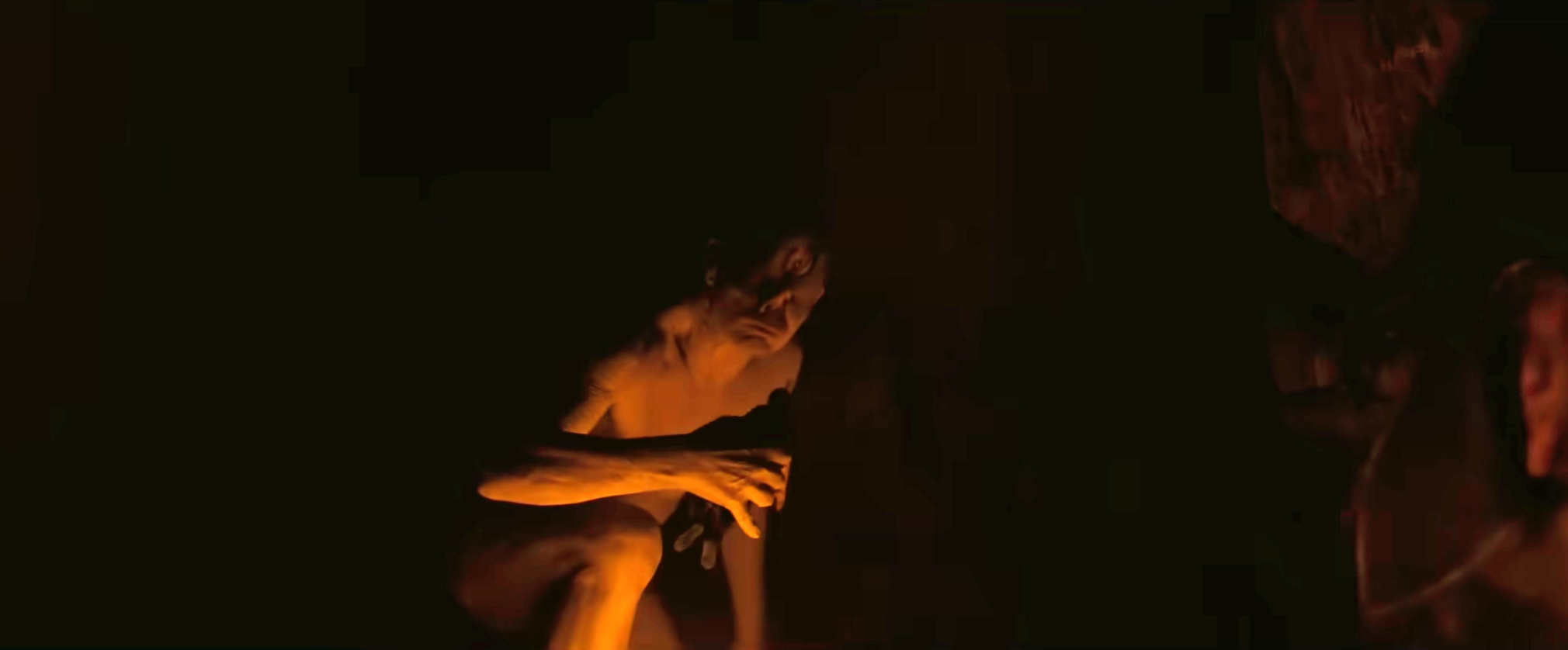
That said, the journey itself is not dull. The cave where the one-eyed giant Polyphemus dwells, the island of the witch Circe who turns subordinates into pigs, the scene where he meets the blind prophet Tiresias in the underworld.
Images from mythology that were only imagined through words come alive on screen. It shows how much effort this film put into the texture of myth itself as much as into human interiority.
What sustains the story in the midst of this magnificent journey is Matt Damon. There is a saying that "when Matt Damon suffers, the film works." In this film, he literally goes through the wringer.
He pushes himself to the bottom both physically and emotionally. He shows the face of an exhausted human, not a hero. That fatigue and obsession is the emotional core of this film.
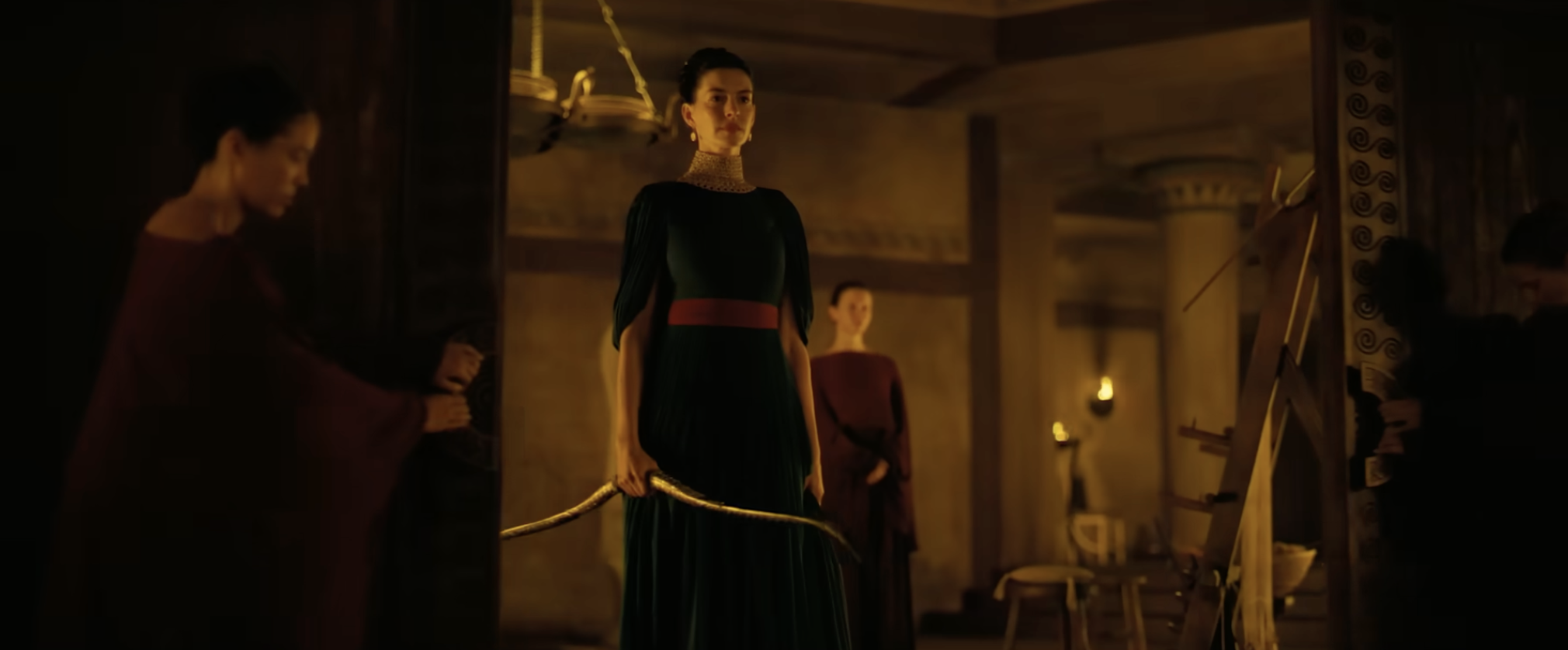
The transformation of female characters is also striking. Penelope (played by Anne Hathaway), Odysseus's wife, is no longer a figure who waits submissively.
As an active being who has maintained her position as queen for twenty years, she forms a tense relationship with her son Telemachus (played by Tom Holland).
All this comes together most compressively at the final reunion scene. In the original work, Odysseus proves his identity by stringing a bow, and then confirms each other through a "bed test" with Penelope.
The film, meanwhile, transforms this process into something far more internal. The two converse with a door between them, and Penelope confirms who has returned from his words.
What is revealed here is not the return of a hero but the reason for the time that never returned. Why he could not return, what held him back, he confesses.
That confession is steeped in guilt. The fact that he survived the war, and the memory of the choices he made in that process.
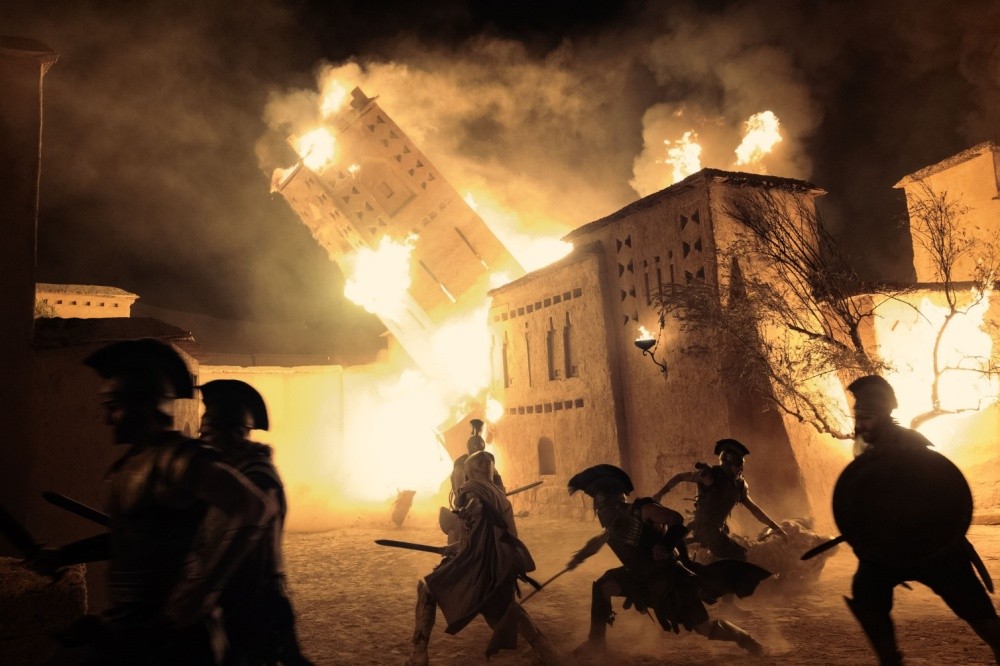
This scene stands in sharp contrast to the film's opening. The Trojan War is initially presented with images of greatness and victory. Yet in the later recollections, it reveals a completely different face.
Dead soldiers, sacrificed people, and the perspective of a survivor bearing all those memories. The same event, but the way it is remembered has completely changed.
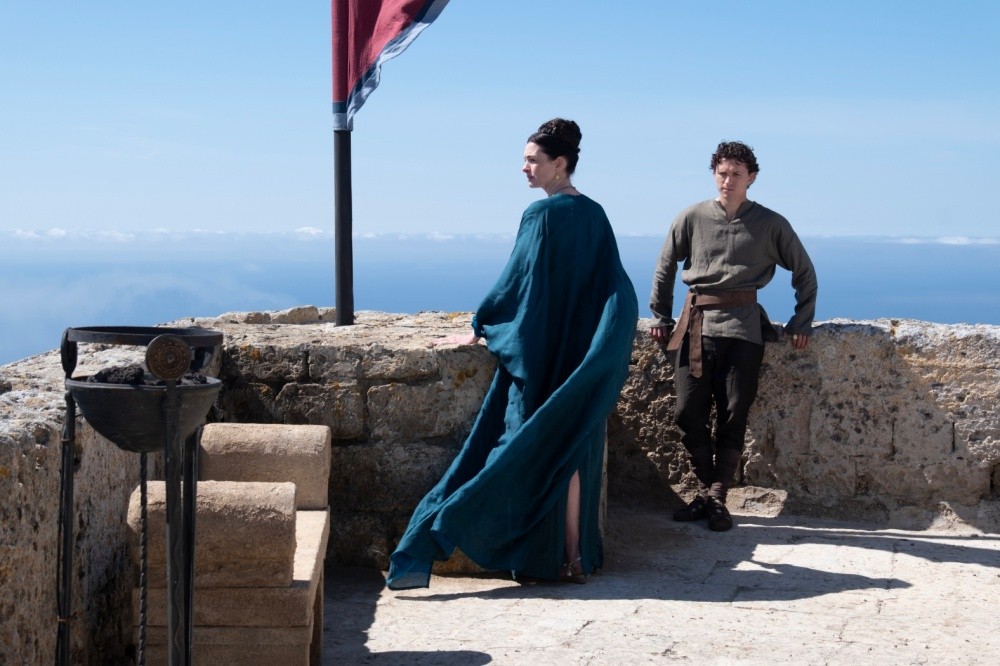
Ultimately, in this film, return is completed not at the moment of arrival home but at the moment of confronting that memory. Rather than rewriting mythology, it digs relentlessly into the human fractures that were already within it.
Of course, there are regrets. In the climax where Odysseus faces the suitors, the emotional buildup is sufficient, but the action direction itself fails to meet expectations in terms of satisfaction.
Also, the character of Telemachus more often provokes frustration than heightening dramatic tension.
Nevertheless, after watching the film through to the end, the initial elements that caught attention feel unimportant. One realizes that this long journey was not simply a narrative of a hero's return, but an inner voyage.
Strip away the grand exterior of war and adventure, the intervention of gods, and what remains at the heart of the story is the persistent human will to return to oneself.
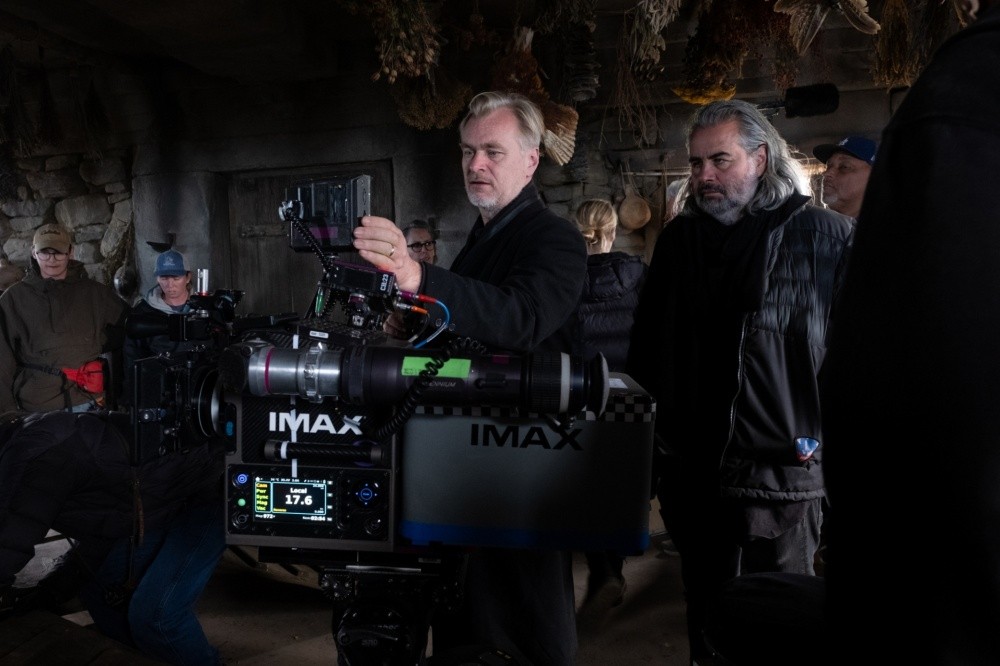
Why Christopher Nolan chose this story now also becomes clear here. What matters is not precisely recreating the story, but how that story functions anew for us now.
Unfamiliar yet persuasive, rough yet ultimately resonant. "Odyssey" is a fairly valid answer to how to bring classics into the present.
(P.S. This film is the first feature-length film shot entirely on IMAX film. IMAX has a much wider aspect ratio vertically than regular theaters.
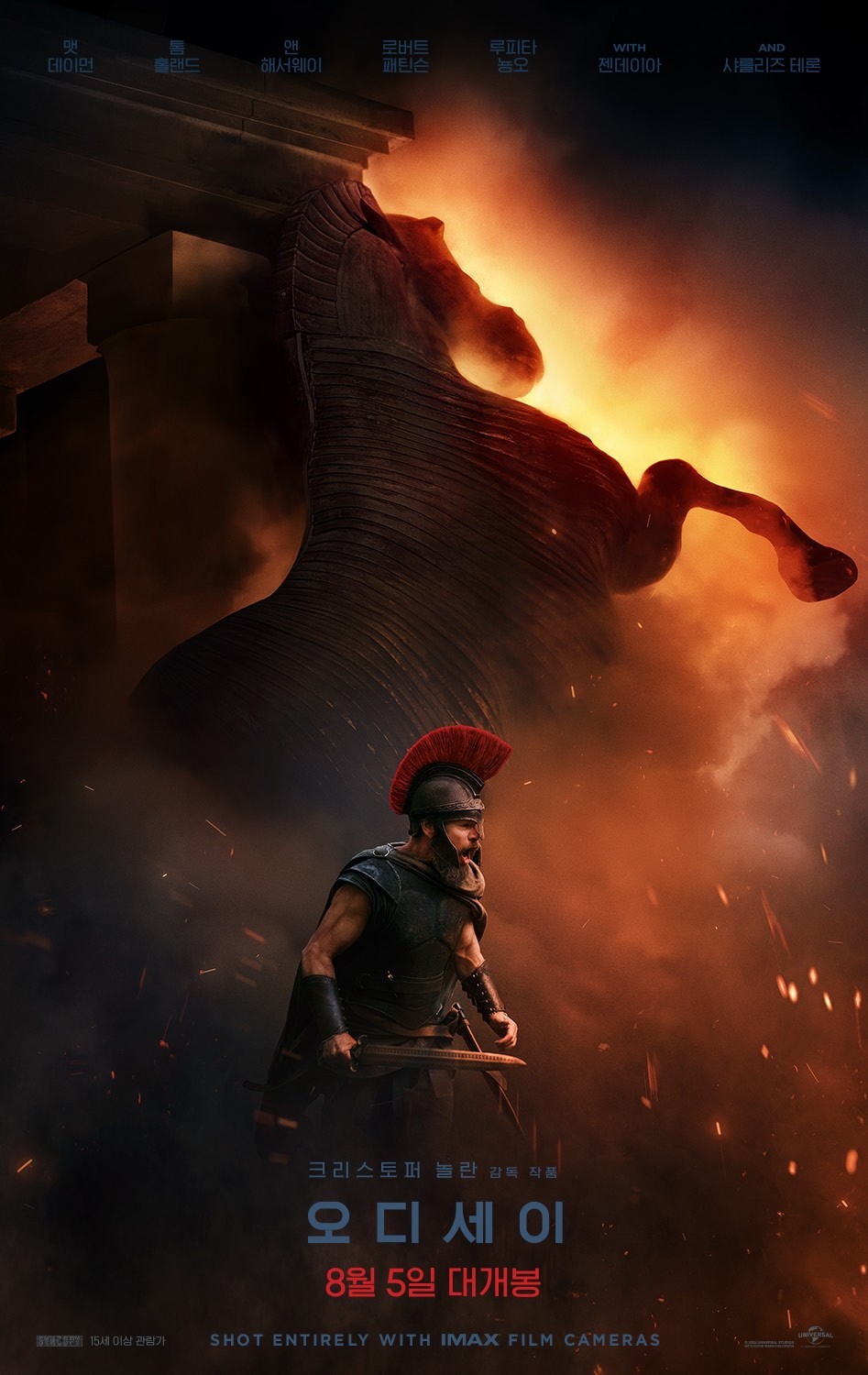
The scale of massive objects like the Trojan Horse or Polyphemus feels far more overwhelming. The immersion this film provides seems like it would feel like only half without IMAX.)
"Odyssey" opens on the 5th.
"The Longest Confession of a Survivor" (Odyssey ★★★★)
<Photo source=Sony Pictures>